Sur cette page
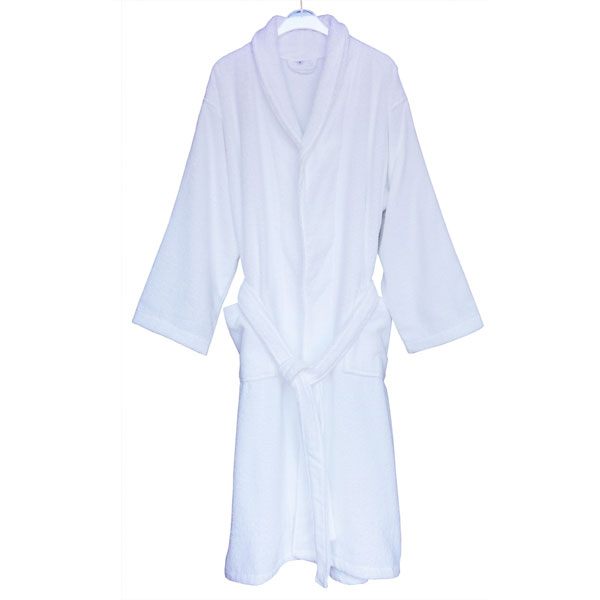
Choose a hotel kimono robe if you prefer a simpler, flatter neckline, and consider a shawl collar if you enjoy more fabric around the neck. Then check the actual cut. Collar style does not determine fibre content, absorbency, warmth or how securely the robe will overlap when you sit.
The useful question is what the neckline changes during your routine. A collar that feels cosy while reading may be awkward while washing your face. A flat neckline that looks neat on a hanger may need more attention if the front panels do not provide enough coverage.
Begin at the neck, where the styles feel different
A kimono-style bathrobe commonly has a relatively flat band around the front opening. A shawl collar has a broader folded shape around the neck. These are everyday robe descriptions, not a promise that every garment follows identical traditional construction.

Think about how much fabric you like behind your neck. If you dislike a thick fold pressing against a chair, a simpler band may appeal. If you enjoy a fuller wrap around the upper chest, a shawl collar may feel more comforting. Both preferences are about use rather than status.
Try turning your head and looking down while wearing a similar garment. Notice whether the collar bunches, opens or sits comfortably. A photograph cannot show that sensation, especially when the garment is arranged perfectly for display.
Separate the collar from the fabric
It is easy to associate a shawl collar with thick terry and a kimono outline with a lighter fabric. Those combinations exist, but the collar name itself does not establish the material or weight. Read the fibre description and garment details separately.
Le terry bathrobe in the site’s hotel collection provides one style to compare with the cotton waffle robe. Look at the visible neckline and confirmed measurements of each actual product. Do not assume the same size label means the same fit across both.
For background on looped robe fabric, Wikipedia’s terrycloth article explains the structure. That helps separate a fabric term from a collar term. The robe’s whole design still determines the practical experience.
Sit down before deciding that the front fits
A robe needs to work while you sit, lean and stand again. When trying one on, arrange the front panels naturally and tie the belt comfortably. Then sit without pulling the garment into an unusually careful pose. Notice whether the upper opening and lower overlap remain comfortable.
A broader collar may cover part of the upper chest but does not create extra width in the lower front panels. A flat neckline may look more open at the top while the rest of the robe wraps generously. Judge each area rather than treating the collar as a substitute for fit.
If you feel the need to pull the belt very tight, check whether the garment is too small or the belt loops sit at an awkward height. Excessive tightening can create bunching at the waist and make a collar seem uncomfortable for a reason that starts elsewhere.
Try the movements that matter at the basin
Raise your hands as though washing your face, brushing your hair or applying skincare. Check the sleeve ends and the amount of fabric that moves toward the sink. A robe that feels perfect while standing still may become inconvenient during these ordinary tasks.
The sleeve cut matters as much as the collar. A broad sleeve can drape into the work area, while a longer cuff can get wet. Rolling it temporarily may help during use, but you should not need an elaborate adjustment every time you reach for a tap.
Check whether the neckline stays where you expect as you reach. If one side slides off the shoulder or the back rides up, compare shoulder room and front overlap. Buying the same robe with another collar may leave the underlying fit issue unchanged.
Choose by the activity, then confirm the detail
Use the table to identify a priority rather than to declare one style better. The same person may reasonably enjoy different robes for different activities, but you do not need a separate wardrobe for every room.
| What matters in your routine | Detail to inspect | Why the collar name is not enough |
|---|---|---|
| Sitting against a chair | Fabric bulk behind the neck | Collar thickness varies by garment |
| Getting ready at a washbasin | Sleeves and stable upper coverage | Sleeve cut is separate from neckline |
| Feeling wrapped around the shoulders | Neck shape and front overlap together | A broad collar cannot fix a narrow body |
| Wearing a robe in a warm room | Whole garment weight and coverage | Both collar styles can use different fabrics |
| Folding for travel | Actual folded size | A flat-looking neckline may still belong to a bulky robe |
Pay attention to where the belt sits
The belt helps the robe remain in place, but its position also changes how the upper garment hangs. Loops placed too high can pull the fabric toward the chest. Loops too low may leave more movement above the waist than you expect. Body proportions matter.
When comparing online, look for a garment-length measurement and ask about loop position if it is a recurring comfort issue for you. A chest measurement alone cannot explain why a previous robe always felt wrong at the waist.
The belt should be long enough for a comfortable tie without creating an oversized bundle. Avoid choosing solely by the amount of spare belt in a photograph, which may reflect how the garment has been styled. Ask for actual information when fit depends on it.
Consider the collar after washing and drying
A broader collar can contain several layers at the fold. After washing or damp use, check that the inside is dry before storage. A flatter band can also remain damp where front panels overlap, so neither shape removes the need for sensible hanging space.
Follow the care label for the full garment. If hanging is permitted, arrange the shoulders and opening so the collar is not pressed into a wet bundle. If another drying method is specified, use that rather than assuming every robe can be hung from a hook.
Keep an eye on local marks around the neckline. Body products and routine contact can affect that area differently from the lower panels. Treat a mark according to the fabric and product instructions, without turning regular robe care into a harsh whitening exercise.
Describe the comfort you want before you order
Use a short description such as “a flatter neckline for sitting and reading” or “a fuller neck wrap without long cuffs.” This is more useful than asking for the most luxurious collar. It gives you a way to compare options that look equally attractive online.
Confirm the measurements and the actual garment style. If a listing uses a generic robe image, ask whether it shows the version you will receive. Keep the seller’s answer with the order if a particular collar, sleeve or belt arrangement is essential.
Use the form below to ask about the neckline and fit of the site’s available robes. Explain the movement or activity you want to make comfortable. The right choice should improve that moment, not simply imitate a room-service photograph.
Is a hotel kimono robe the same as a traditional kimono?
In robe listings, kimono often describes a simplified flat neckline and wrap style. Do not assume that the garment has the construction or cultural role of a traditional kimono. Read the actual robe description and measurements for the item being sold.
Does a shawl collar make a robe warmer?
It can provide more fabric around the neck, but overall warmth depends on the material, weight, coverage and conditions of use. A collar name alone is not a thermal rating. Consider whether you want neck coverage or a warmer garment as a whole.
Which collar is better after a shower?
Choose the one that feels comfortable after you have dried off and that you can dry and store properly. Surface feel, garment weight and fit matter as well as neckline. There is no single collar style that suits every person’s bathing routine.
Can changing collar style fix a robe that opens when I sit?
Not necessarily. Check body width, front overlap, garment length and belt position. A broader neckline may change upper coverage without solving an inadequate lower wrap. Compare the measurements and seated fit before choosing only by appearance.
Should the robe collar lie perfectly flat?
It should sit comfortably in normal use, but the expected shape depends on the design and fabric. A folded shawl collar will not look like a narrow flat band. Persistent twisting, pulling or bunching is a reason to check fit, care and construction rather than forcing it into a photograph-like shape.