In questa pagina
A new cotton hotel towel can feel soft yet move water around instead of taking it up comfortably. Before deciding that cotton is the problem, wash the towel according to its label and check the laundry products you use. The surface condition and fabric construction affect the experience as well as the fibre name.
Judge the towel during an ordinary drying routine, not from one drop of water placed on a packaged sample. If the problem continues after appropriate care, describe what happens and ask the supplier about the exact item. A material label cannot explain every finished-product result.
Start with what the towel actually does
There is a difference between a towel that leaves small wet patches on the skin and one that becomes saturated before you finish. There is also a difference between slow initial wetting and a towel that absorbs but feels unpleasantly heavy afterwards. Notice which problem you are trying to solve.
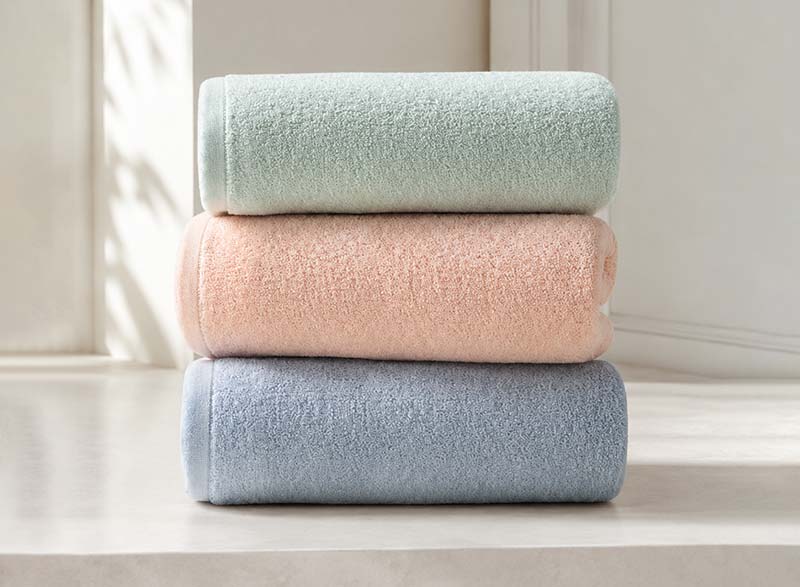
Use a comfortable press rather than vigorous repeated rubbing. Check whether water transfers into the towel across the ordinary drying area or whether some regions behave differently. Decorative bands may have a different structure from the main surface, so do not judge the whole towel only from the band.
Avoid making a performance claim from a casual demonstration. A home comparison can help you choose what feels useful, but it does not establish a laboratory absorption rate. Keep the observation specific: the towel needed extra passes, felt coated, or became wet too quickly for your routine.
Cotton and the finished surface are different things
Cotton identifies the fibre, while a finished towel includes yarn, construction and surface treatments. Those other factors influence how the fabric contacts water and how it feels in the hand. Two cotton towels can therefore feel quite different without either description necessarily being false.
Finishing is one reason the first touch does not tell the entire story. A product used to change fabric feel is doing a different job from the fibre itself. Softness is therefore an observation about the finished surface, rather than a direct measurement of water pickup. For background on the category, the Wikipedia overview of fabric softener explains what these laundry products are intended to do.
That does not mean every new towel has the same finish or that any finish is automatically a defect. The practical point is to follow the before-use instructions and evaluate the actual item after appropriate washing, rather than treating the showroom feel as the final answer.
Give the first wash a clear purpose
Read the towel’s care label before choosing the cycle. Use a compatible detergent and the quantity recommended for the load and water conditions. Keep the towel with suitable colours and fabrics, especially if it is strongly coloured or likely to release initial lint.
Do not add several “towel revival” products in the same first wash. If the towel improves, you will not know which change mattered. If the colour or texture changes badly, you will also have a more complicated situation to explain. A straightforward label-led wash gives you a clearer baseline.
Dry the towel fully using a permitted method before judging the feel again. A towel that starts the next use already damp has less capacity available and can feel disappointing for a completely different reason. Confirming the dry starting condition is part of a fair comparison.
Look at your softener habit
If you automatically add fabric softener to every load, check whether the towel maker recommends that practice. A product intended to change feel is not necessarily helpful for a towel whose main job is to take up water. More softener is not a reliable response to disappointing absorption.
Try the permitted routine without unnecessary additions and observe the next complete use-and-dry cycle. Keep the detergent, load and drying arrangement sensible and consistent. The goal is to remove one possible contributor, not to prove that a single product caused every problem.
Also check the washer’s dispenser guidance. An incorrect setting, an overfilled compartment or old product buildup can complicate what actually reaches the fabric. Follow the machine instructions for dosing and cleaning rather than guessing from the amount left in the bottle.
Compare construction without choosing a universal winner
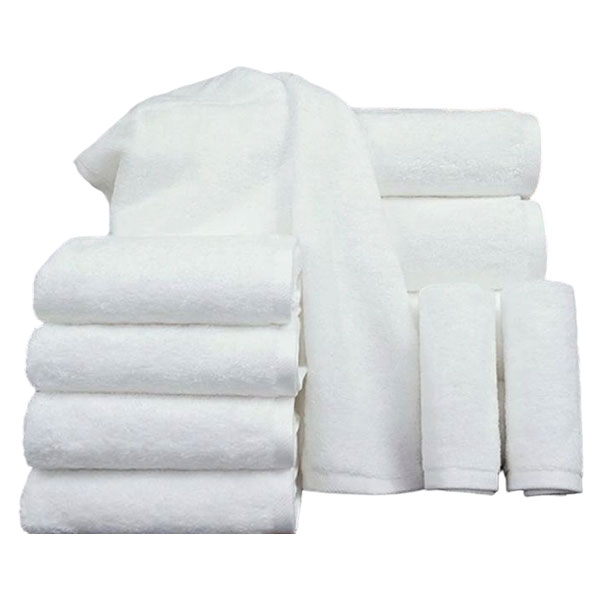
Looped terry gives a different contact surface from waffle fabric. A denser or larger towel may also hold a different amount of fabric against the skin. Those differences can be felt in use, but they do not produce a simple rule that every terry towel outperforms every waffle towel.
| What you are comparing | What to keep consistent | What the comparison can tell you |
|---|---|---|
| Two towel sizes | Start with both completely dry | Which amount of cloth suits your drying routine |
| Terry and waffle surfaces | Use a comfortable similar drying action | Which texture you prefer against the skin |
| Before and after an appropriate wash | Follow the same intended use | Whether the practical experience changed |
| Two laundry routines | Change one suitable factor at a time | Whether that change seems useful at home |
| A new and a worn towel | Note visible damage and surface differences | Whether condition may be affecting your preference |
Use the result to make a household decision. Do not convert a personal preference into a product-wide claim or a guaranteed percentage improvement.
Make sure the towel is not already damp
After a shower, open the towel rather than leaving it in a bundle. Wet layers touching each other can take longer to dry, especially in a damp bathroom. By the next use, the surface may feel almost dry while the thicker hems or folded centre remain moist.
Check those areas before blaming fibre content. Spread the towel where air can reach it and avoid pressing it against another wet towel. If the room itself stays humid, review the ventilation and household drying arrangements. Buying a different finish cannot create fresh air or extra hanging room.
At home, a small rotation can help keep a dry towel available while another is washed or drying. The number needed depends on your routine. You do not have to replace all your towels simply because one was being reused before it had dried fully.
Read listings with questions you can verify
Look for the actual material statement, dimensions, weight units and care directions. Words such as super absorbent or premium can describe a sales intention without giving you a comparison method. If a specific property determines the purchase, ask how it is supported for that item.
Il cotton terry hotel towel e waffle weave hand towel show different forms in the site’s range. Compare them for suitable jobs and confirmed details. Do not assume that a hand towel and a bath towel should feel identical just because both mention cotton.
Where a title and specification table do not clearly agree, request clarification. It is better to confirm the product before purchase than to build expectations around a description that may refer to another variant. Keep any important answer with the order information.
Know when another wash is unlikely to answer the question
If a new towel remains frustrating after appropriate care, record the steps already taken. Note the label instructions, products used, load conditions and the precise behaviour you noticed. Contact the seller while you can still describe the original issue clearly.
Repeated aggressive washes can introduce damage or change the surface, making it harder to separate the starting problem from later treatment. Do not keep escalating heat or chemicals in the hope that every towel can be forced into the feel you prefer. A different construction or size may simply suit you better.
Use the form below for product-specific information or to compare a style before ordering. Explain whether you want a cushioned feel, a lighter cloth, or a towel that fits limited drying space. Those preferences make the choice practical while keeping unsupported performance promises out of it.
Is cotton naturally enough to guarantee an absorbent towel?
No single fibre statement guarantees the finished experience. Construction, surface condition, dimensions and care all matter. Check how the actual towel works after following its instructions, and ask for evidence if a specific measurable performance claim is important to your purchase.
Should I wash a new towel several times before deciding?
Follow the supplier’s before-use guidance and the seller’s policy. A sensible initial wash can provide a useful baseline, but repeated harsh treatment is not a good substitute for contacting the supplier about an unresolved issue. Keep the steps you take easy to describe.
Can a very soft towel absorb poorly?
It can feel softer than you like for effective drying, or have a surface condition that changes wetting. Softness and absorption are different observations. Judge both rather than assuming that the smoothest first touch will give your preferred after-shower result.
Does a thicker towel always hold more useful water?
Thickness alone does not settle the question. Size, fabric structure and the starting dryness all affect the experience. More fabric can also mean more wet weight and drying space. Choose a balance that works through the whole routine, not just at the first touch.
What is the most useful thing to tell the seller?
Describe what happens during normal use, how the towel was washed and whether it started fully dry. Include the exact style or order reference. “Water remains on my skin after several comfortable passes” is clearer than a general statement that the material is wrong.