On this page
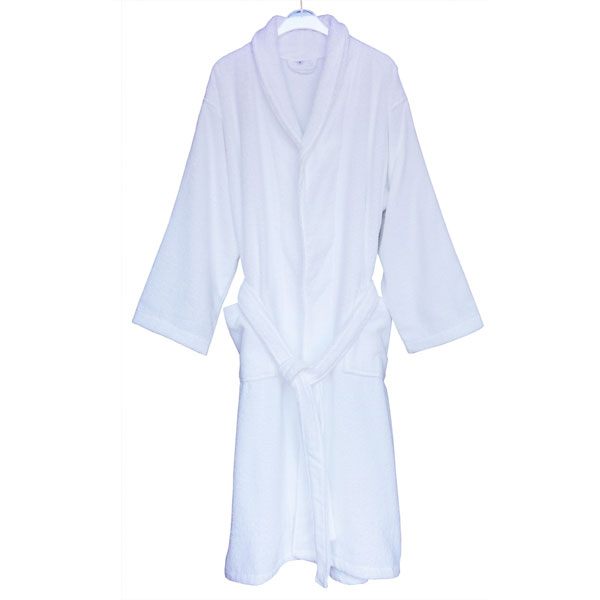
Wash a hotel bath robe according to the label on the complete garment, with enough room in the machine and a drying method that the label allows. Shape problems often become more noticeable when a heavy robe is squeezed into a crowded load, stretched while wet or dried in a way its maker did not intend.
Before the first wash, take a few simple measurements and check the belt, pockets and seams. These small preparations make it easier to tell a real change in size from a robe that has merely dried in an awkward position. Cotton content alone does not tell you the correct cycle or guarantee that every part can tolerate the same treatment.
Read the label as a set of instructions
Look for washing, bleaching and drying directions together. A machine-wash symbol does not automatically permit tumble drying, and white fabric does not automatically permit chlorine bleach. Embroidery, trim and other components may impose limits even when the main fabric seems familiar.
If the symbols are unclear, the FTC care-symbol chart provides a visual reference. Use it to interpret the garment’s instructions rather than to replace missing instructions with a general cotton-washing rule.
Check whether the belt has a separate label or whether the manufacturer gives a specific method for keeping it with the garment. If the label is missing, request care information for the exact style. Guessing from another robe can be misleading because fabric, decoration and construction differ.
Record the fit you want to preserve
Lay the dry robe flat, overlap the front panels consistently, and measure the same points you will use later. Overall length, sleeve length and a clearly defined chest measurement give you a more useful comparison than a photograph of the robe hanging on a door.
Note how the garment feels while you sit and reach. A sleeve can appear shorter when the shoulder seam is sitting farther back, and a front wrap can feel smaller because the belt is tied differently. Fit involves more than the fabric dimensions, so make the initial check in a normal wearing position.
You do not need to track tiny differences after every wash. The record is a reference if something changes enough to affect use. Keep the measuring method consistent and avoid stretching the robe to recover the number you remember from before washing.
Empty pockets and deal with marks locally
Remove tissues, hair accessories and other objects before the robe enters the washer. A forgotten tissue can spread small fragments through the loops, while a hard object can catch on fabric. Check the belt ends and pocket corners for anything that needs attention.
For a local mark, identify what caused it if you can. Makeup, body lotion and an accidental drink spill are different problems. Use an appropriate treatment only if it is compatible with the garment, and test discreetly as directed. Do not apply a strong general cleaner merely because the robe is a household item.
Avoid scrubbing the same small area aggressively. Repeated friction can change the surface even if the mark becomes less obvious. If the robe is new and you are still deciding whether to keep it, check the seller’s policy before treating or washing it.
Choose a load that lets the garment move
A robe can look compact when folded but become a substantial wet item. Follow the washer’s capacity and programme guidance rather than judging by whether you can close the door. Sleeves, the overlapping front and a thick collar all need appropriate movement during washing and rinsing.
Keep the colours and care requirements compatible with anything else in the load. Towels may be similar in feel to a terry robe, yet they are not automatically the right companions. Lint behaviour, decorations and the permitted drying method can be different.
Use the detergent’s stated dose for the load and water conditions. A small robe-only load should not receive an unexamined full-load dose, while a genuinely soiled load still needs suitable cleaning. More product is not a shortcut to keeping the collar fresh.
Handle the wet robe with support
When the cycle ends, remove the robe without dragging it by one sleeve or the belt. Support its weight with both hands or a basket as you move it to the drying area. Water adds weight, so a wet garment can pull on a small area more than a dry one does.
If machine instructions and the care label permit a suitable spin, use the intended programme rather than twisting the robe into a tight rope by hand. Wringing can leave the panels and seams distorted. A robe that has been compressed needs room to relax into its normal shape.
Straighten obvious folds gently, without pulling hard on cuffs or hems. Check that the pockets are not folded into thick trapped layers. The aim is to arrange the garment for drying, not stretch it beyond its natural dimensions.
Dry each part rather than only the outer surface
The outside can feel dry while the collar, pocket seams or belt remain damp. Open the robe enough for air to reach those areas, using the drying method its label permits. A crowded hook may be convenient after wearing but unsuitable for drying a freshly washed garment.
If tumble drying is allowed, use the stated heat level and avoid extending the cycle simply because the robe is cotton. Inspect the thicker areas near the end rather than assuming that a dry sleeve proves the whole garment is ready. Follow the machine instructions for handling a single bulky item.
| Area to inspect | What may remain hidden | Practical check |
|---|---|---|
| Collar fold | Damp fabric where layers touch | Open the fold and feel both sides |
| Pocket corners | Several stitched layers | Check the lower corners before storage |
| Belt | A dense roll or knot | Untie and dry it as instructed |
| Sleeve ends | Rolled or doubled cuffs | Turn down temporary folds |
| Front overlap | A dry outside over a damp inside | Separate the panels during the check |
Distinguish changed texture from changed size
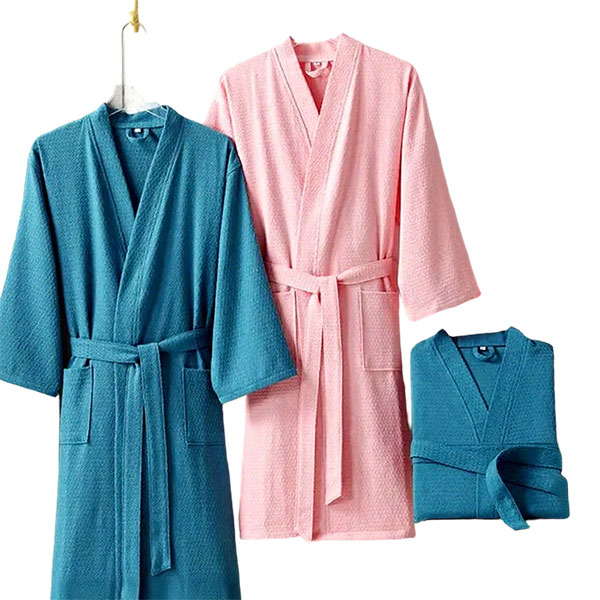
A waffle robe can look different as the textured surface relaxes through washing. A terry robe may feel fuller or flatter depending on drying and condition. Those visible changes are not automatically proof that the whole garment has shrunk beyond use.
Let the robe dry fully, place it flat as before, and repeat the original measurements without stretching. Compare the same points. If the fit has changed, describe which part: sleeve reach, length, front overlap or shoulder movement. This gives the supplier a problem that can be discussed clearly.
The site’s waffle cotton bathrobe and terry hotel bathrobe are different garments. Ask for care information relevant to the exact one you choose, rather than transferring instructions between them based only on cotton wording.
Store it only when the whole robe is ready
Hang or fold the fully dry robe in a clean space where it will not be compressed against damp towels. If you keep the belt attached, avoid a tight knot that leaves a thick bundle against the fabric. After the next wear, reopen the garment so any moisture can escape before it returns to storage.
If the robe has become uncomfortable despite careful label-led washing, repeated hot washes are unlikely to be a useful experiment. Review the dimensions, the drying method and the original fit. Some problems require a different garment rather than a stronger laundry treatment.
Use the form below to ask about a particular robe’s care or measurements. Include the style, the label directions and the specific part that changed. A clear description is more useful than asking for a universal wash temperature for all hotel robes.
Can I wash the belt with the robe?
Follow the garment’s instructions and check whether the belt has separate directions. Keep it from becoming a tight knot or catching on other items. Do not assume that every decorative belt or trim tolerates the same treatment as the main fabric.
Should I wash a new hotel bath robe before wearing it?
Follow the maker’s before-use guidance. If washing is recommended, first check your fit and the seller’s policy so you understand what is allowed while assessing the garment. Use the label instructions rather than a special hot treatment based on assumptions.
Will hanging a wet robe stretch it?
A heavy wet garment can put stress on the points supporting it. Use the drying method allowed by the label, support the robe when moving it, and avoid leaving all its weight on a small weak area. The appropriate arrangement depends on the actual garment.
Can softener prevent the robe from shrinking?
Do not rely on softener as a shrinkage-prevention method. Care compatibility, handling and drying matter. Use products only as permitted and for their intended purpose, especially if the robe is also expected to take up moisture after bathing.
What should I tell the supplier if the fit changes?
Provide the product identity, care directions followed, and consistent before-and-after measurements if available. Explain how use is affected, such as reduced front overlap or short cuffs. Photographs can help document the issue, but comparable measurements are more precise than differently posed images.